Best Fence Contractors: Leading Signs of Quality Installment
@fencingcontractorddld714
September 21, 2026 · 17 min read
A fence is just one of those home upgrades you discover everyday, also when every little thing's peaceful. It forms exactly how your yard really feels, exactly how exclusive it really feels, and exactly how secure you actually are. And yet, it's likewise a task where "looks fine from the road" can conceal troubles that appear months later on, after the timber dries or the dirt moves.
When individuals look for the very best fence installers, best fence contractors, or best fence companies, they're usually chasing after two things simultaneously: craftsmanship and integrity. The bright side is that top quality setup leaves ideas. If you know what to look for, you can detect a strong team prior to you ever before pay the last invoice.
Below are the clearest signs of top quality fencing installment, the compromises that explain what you may see, and the questions that help you different actual handiwork from simply suitable marketing.
The first tell: exactly how the specialist talks about your site
The most reliable teams do not start with a catalog. They begin with your ground, your objectives, and your restrictions. You'll hear them ask sensible questions like just how the fencing line runs about existing trees, whether you get heavy wind, and whether any kind of lawn sprinklers cross the suggested route.
A quality specialist also speaks to specific care concerning website conditions. They will state drainage patterns, slope, and soil kind due to the fact that those aspects determine whether you need different message spacing or a deeper ground. If you live somewhere with clay dirt that heaves or sandy dirt that drains quickly, that changes how the posts need to be supported.
If the discussion is primarily regarding price per foot, without much interest to ground problems, that's a warning sign. Fencings fail at the blog posts, not at the pickets. Price talk without site talk typically means the installation plan is being standardized, not engineered for your situation.
Strong dimensions, tidy layout, and genuine interest to line
A fencing can be straight and still be wrong. You want straight positioning, but you also want correct placement. Quality installment usually turns up in the design phase:
- Posts that align smoothly in point of view, not simply "close enough."
- A fence that respects residential or commercial property lines and prevents awkward offsets that look fine at day one however create problems later.
- Consistent spacing in between rails, pickets, or slats.
One property owner I satisfied had actually a fencing installed that looked great in images, yet eviction ran out square by regarding a half inch after the very first period. The installer blamed the weather condition. The actual concern was design. The hinge side blog post had been set without looking for squareness throughout installation, and as soon as the frame was attached, eviction positioning was locked into an error. Gradually, that fifty percent inch ended up being a misfit that caught the wind and made the lock stick.
The best fence contractors are obsessive concerning measurement checks. They might not call them "engineering," but they will verify vital dimensions at several stages, specifically before the staff starts exploration and setting hardware right into the ground.
Proper blog post deepness and safe and secure footings
Posts are the foundation, and you can not "fix" a weak foundation with nicer wood. If you ask exactly how they will establish articles, top quality service providers clarify it plainly and consistently.
Look for 3 things:
- They will certainly go over how deep the articles will be set based on neighborhood conditions and fence height.
- They will certainly define the approach, like concrete with appropriate prep work, or a crafted ground approach for sure installations.
- They will certainly make it clear that messages require time to heal if concrete is used, which the fencing must not be totally loaded immediately.
Depth requirements differ by area, frost deepness, dirt, and whether the area sees freeze thaw cycles. Because you can not think the exact same numbers anywhere, the specialist must fit telling you what they plan for your building and why.
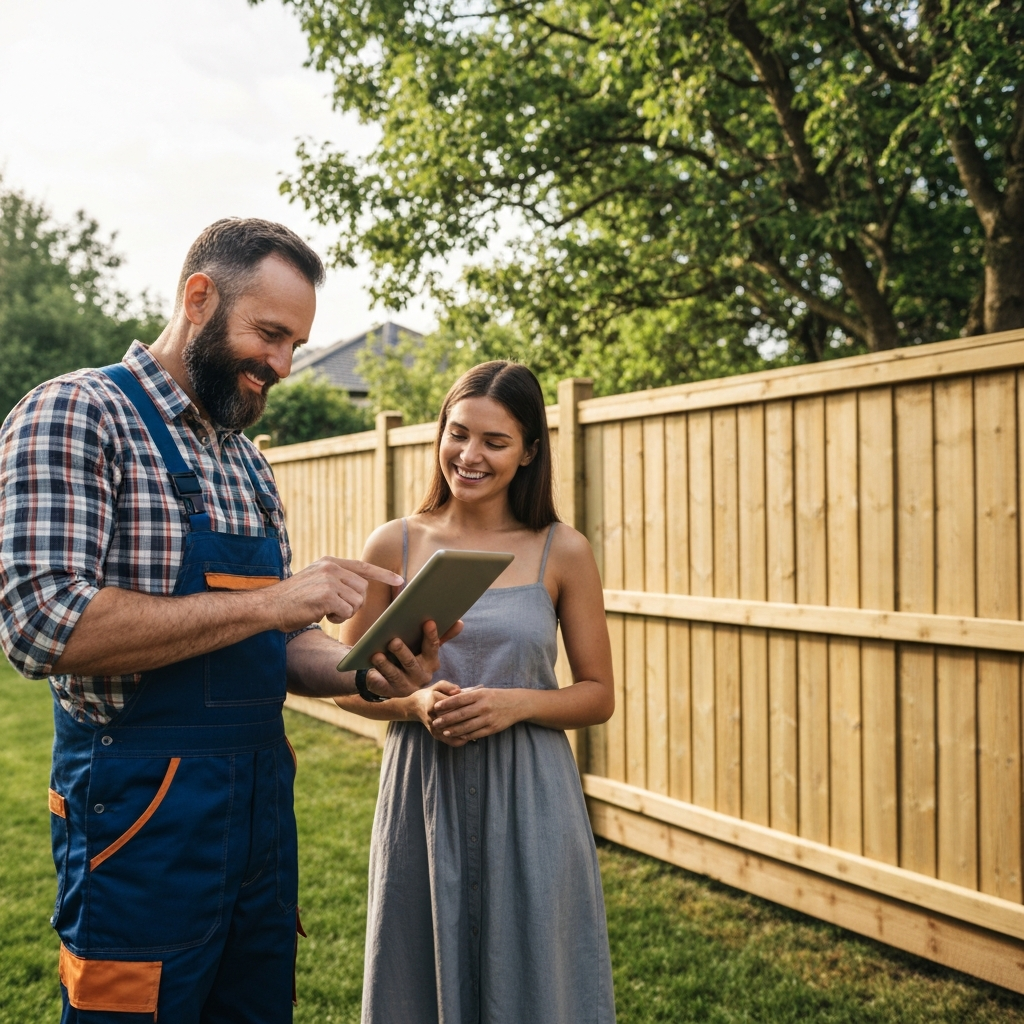
A common failing setting is the "superficial collection." The fencing can represent a while, specifically in dry, secure soil. Then a rainy season or hefty freeze thaw cycle loosens up the blog post. You see the telltale signs, leaning sections, spaces that widen, and sagging rails. Those problems constantly make the fencing look older than it is.
Rails, stress, and the difference in between a pretty fence and a rigid one
A great deal of fences look respectable when they're very first developed. The problem is rigidity. A top quality installment makes the fencing stand up to activity, not simply present a surface.
What to seek:
- Consistent rail accessory height and limited fastening.
- Rails that connect easily with corners and line articles, not just "mainly there."
- Proper use of equipment and bolts ranked for outside use.
Depending on fencing design, quality teams will certainly also take care of tension effectively. As an example, picket fences and several board-on-board styles are built to remain aligned despite minor timber movement. If you see hardware that's loose, fasteners that look undersized, or rails that are irregular, the fence will at some point twist.
I've also seen situations where a professional utilized nice-looking products, but the rail spacing was off by a percentage. It seems minor up until you recognize wood expands and agreements. When rails and boards are spaced unevenly, activity comes to be concentrated at the vulnerable points, and that's where you end up with waves or irregular gaps.
Material high quality issues, yet setup chooses the longevity
The best fence companies will ask you whether you desire the fencing for look, privacy, security, or all 3. That choice needs to impact the product option and the construct design. Timber, plastic, aluminum, composite, and chain connect each have installation information that matter.
Here's just how installment differences appear:
- Wood fences: Quality work uses appropriate lumber choice, straight boards, and right securing patterns. It also protects the wood from wetness, specifically at cut ends and at message transitions.
- Vinyl fences: Strong staffs pay attention to just how sections are supported and how development is handled. Vinyl relocations with temperature level, and posts should be mounted to allow foreseeable development without buckling.
- Aluminum fences: The fit and placement depend greatly on precise measurements and proper anchoring. Loosened anchors lead to totter, which looks careless and minimizes security.
- Composite and crafted boards: These can be steady, yet they still need correct attaching so you do not stress the material.
- Chain link: Quality setup is about tension, line posts positioning, bracing at corners, and safe connections. A wire mesh fence can "look fine" while still being poorly tensioned, and then it sags or plucks the edges.
The key point is this: you can acquire great product and still wind up with a fence that falls short early if the staff shortcuts positioning, footing, and fastening.
Straightness and proportion: the details you can inspect without tools
You do not require a professional's skill set to spot high quality. You require to look very carefully during and right after install.
Walk the line and look for patterns:
- Are post tops constant, or do you see noticeable elevation differences from one section to the next?
- Do rails rest uniformly across multiple posts?
- Do boards align at corners, or do they "action" in an irregular manner in which suggests poor planning?
A high quality installer generally builds with a plan for exactly how variations will certainly be managed. If your backyard inclines, the most effective strategy could be action fencing, angled areas, or changing elevations at defined factors. What you do not want is random offsets that appear like the fence was fitted after the fact.
One house owner told me their fence had "just small waviness," and it appeared manageable until they repainted the gate. When the gate and surrounding areas remained in the same shade, the minor twist showed a lot more clearly. That spin originated from unequal blog post deepness and rail fastening on edges. The installer had actually done the remainder well, however edges were the weak spot. Corners must be among the strongest points, not the flex points.
Corners and entrances expose everything
If you desire the fastest honesty test, check corners and entrances. A lot of failures appear there first since those areas experience the most stress.
A well-built fencing has:
- Braced, enhanced corner posts where the fencing adjustments direction or where line tension draws hard.
- Gate frames that are square and placed so the lock side and hinge side job smoothly.
- Clear equipment placement that stops droop over time.
Quality contractors also represent how entrances act. Gates are moving components, and they must be adjusted for smooth procedure, not compelled. If an entrance drags or calls for pressure to close, it's a setup problem. If it's hard to open up on day one, it's just going to get even worse after seasonal timber movement and ongoing settling.
When a crew rushes entrances, it usually means they are cutting time on determining, inspecting degree, or confirming joint positioning. Gates could be "the last thing they build," yet they are also the initial point you'll feel when you make use of the fence.
Fence spacing and board orientation: small differences become big problems
It's tempting to focus on the noticeable face of the fence, however quality is likewise in what you can not easily see from the street.
On timber fences, pay attention to:
- The orientation of boards and just how they satisfy at rails.
- Consistent spacing if you have a semi-open style.
- Neat reduced edges and just how they are taken care of at posts.
For privacy fencings with overlapping boards, the overlap should correspond. Uneven overlap typically indicates boards were attached quickly without looking for placement. In time, unequal overlap creates inconsistent shading and can make the fencing look patchy.
If you have a composite or vinyl fence with pickets or slats, look for:
- Clean spacing and straight rows.
- Rails or internal supports that do not totter behind the face.
A good installer uses design templates and measurement checks to keep spacing consistent. It is slower, however it stops that "subtle disproportion" that becomes noticeable once the lawn is decorated.
Hardware selection and fastener habits
Quality setup is not nearly timber and plastic. It has to do with the hardware. Even a fence built with outstanding products can rust or loosen if fasteners are the incorrect type or if they're installed carelessly.
Look for evidence of:
- Exterior-rated fasteners and proper deterioration resistance.
- Hardware placed continually, not arbitrarily spaced.
- No stripped screws, no missing fastener heads, and no careless boring that splinters boards.
An information I notice is just how the staff approaches exploration. If they push through without care, you obtain board splitting or rough holes. That can look small in the beginning, but it compromises stamina around fasteners.
Also watch for how they take care of the bottom of fence boards. Timber fences that are installed also reduced about ground dampness can wick water and rot at get in touch with factors. The most effective crews recognize exactly how the fence must being in your environment.
Clean site job: the underrated high quality signal
This could seem little, yet I've found it matters. The method a professional tidies up, secures landscaping, and appreciates your property often correlates with exactly how mindful they are throughout installation.
Signs of a high-quality staff:
- They keep the workplace organized and decrease damage to existing plants.
- They take preventative measures around sprinklers, watering lines, and buried utilities.
- They remove debris without delay, not "later on after the truck returns."
I keep in mind helping a close friend examine a fence after a heavy rainfall. The installer had actually left a mess of wood scraps and concrete pieces near a bed. When we cleansed it up, we noticed watering heads were slightly misaligned and a line had been partially covered. The fencing was standing, but the handiwork and site care were irregular. That's the sort of disparity that commonly shows up later on as a warranty conversation you would rather avoid.
Weather and timing: quality setup accounts for actual conditions
Fence job is exposed. A staff can not regulate the weather condition, yet they can manage exactly how they handle it. Quality contractors intend around rain, wind, and temperature swings.
If concrete is included, they should discuss remedy times. If wood is being set up, they must take care of storage space and deal with materials properly. If it's a warm day and the crew functions as well quickly, you can see fasteners pull, boards warp somewhat, or rails become misaligned as products move.
You do not require a climate lecture. You do need professionalism: clear sequencing, realistic organizing, and the willingness to stop briefly if conditions would endanger the outcome.
Warranty terms that really imply something
A service warranty is only useful if it specifies and useful. The best fence contractors normally give service warranty protection for their craftsmanship and products, and they explain what is consisted of and what isn't.
Pay attention to:
- Duration and what it covers.
- Whether the warranty relates to labor, products, or both.
- How they define failure, particularly for problems influenced by soil movement, tornados, or inappropriate maintenance.
If the warranty language is unclear or extremely wide in exemptions, that's an issue. But additionally be reasonable. No professional can service warranty against every extreme wind occasion or against family pets chewing through a fencing daily. Quality guarantees have a tendency to be fair, and they concentrate on installment defects.
Questions to ask prior to you hire (and why the solutions matter)
If you intend to work with the best fence installers, asking the appropriate inquiries conserves cash and migraines later. You're looking for clearness and for responses that match the realities of your yard.
Here are 5 questions that regularly expose proficiency:
- How deep will certainly the posts be set, and what's the approach for your soil and frost conditions?
- What's your method for corners and gate framework, and how do you keep them square?
- What kind of bolts and equipment will certainly you use, and are they ranked for outdoor corrosion?
- How do you handle fence line measurement and home line placement, particularly around stakes and markers?
- What remedy time or work sequencing do you succeed concrete or footing work?
The best contractors answer without getting defensive. Their answers are consistent with the plan you discussed throughout the quote. They don't treat your inquiries like an inconvenience, due to the fact that good installs are built on clear expectations.
Common red flags that turn up even in "fine-looking" fences
A fence can look eye-catching and still have defects. These are the warnings I listen to most often when home owners call after the problem begins.
If you see any of the following patterns, time out and ask questions:
- Posts that look shallow, loosely anchored, or unequal in spacing.
- Corners that bend, gateways that drag, or latch hardware that does not line up smoothly.
- Rails that are not level or that vary in elevation across the fencing line.
- Boards that look unevenly fastened, with irregular spaces that appear to transform from one area to the next.
- Hardware that looks cheap for the quality of material, or an inequality in between promised product high quality and what's really installed.
Also be cautious if the specialist prevents reviewing their installation technique. "Trust fund us, it lasts" is not a strategy. Quality work is repeatable, and installers with confidence can https://www.biztobiz.org/articles/best-colorbond-fence-installers-in-melbourne-2026 describe how they build.
Trade-offs you must comprehend before selecting a fencing style
People typically anticipate a solitary "finest" fence, yet the very best option relies on your priorities and the fact of your yard.
Wood fences are popular due to the fact that they look natural and can be personalized. They additionally call for maintenance to protect versus moisture and weathering. If you dislike maintenance, wood may not be the most effective fit, even if the installer does whatever right.
Vinyl and aluminum can reduce maintenance, but installment still matters. Vinyl needs right support and allocations for thermal activity. Light weight aluminum requires safe and secure anchoring and excellent alignment. The product might be "reduced maintenance," yet your fencing still relies upon proper message support and setup.
Chain link is commonly picked for protection and sturdiness, yet high quality tensioning and bracing determine just how it performs. A poorly tensioned wire mesh fence can sag and lose its sharp, safe line.
Even gate design is a trade-off. An easy gateway could be more affordable, however a heavier gateway with more powerful framework may cost even more in advance and minimize long-term droop. If your backyard is gusty or your gateway is large, it's worth costs on structure.
Good service providers talk about these trade-offs truthfully during the price quote. They assist you pick what fits, not just what sells.
How to examine the finished fencing like a service provider would
Once the fencing is set up, you can do a functional evaluation in an hour. You are trying to find uniformity and for indicators of hurried work.
Use a straightforward technique:
- Walk the perimeter and check blog post spacing visually. Look for unexpected adjustments in alignment.
- Check corners and entrances first. Ensure the gate swings freely without binding.
- Look along rails from one end. If the fencing undulates, you will normally see it from the side.
- Inspect fastening points. Are boards safeguard without splitting? Are there noticeable voids or missing out on fasteners?
- Look for tidy coating details. Are cut ends managed properly? Exist rough edges where the crew should have been careful?
If you have access to the specialist during the walkthrough, ask to explain exactly how the posts were established and just how they managed drainage and leveling. A confident installer will certainly show you the reasoning behind their choices.
Why "quality" is likewise good communication
The best fence installers and best fence contractors share a trait that does not show in images. They interact. They confirm measurements, line up on time, explain what will occur in each stage, and established expectations for weather delays or treatment times.
Communication also consists of responsiveness after set up. If something shifts slightly after the first season, a great service provider responds promptly and aids fix it. That could indicate changing hardware, including support, or assessing just how the dirt is behaving.
You desire a specialist that behaves like a partner for the future, not someone who disappears after the work is done.
Choosing amongst professionals: what separates the top teams in actual life
If you're trying to pick in between multiple quotes from various companies, the most inexpensive number is not automatically the incorrect choice, however it's hardly ever the safest presumption. A reduced rate can indicate fewer checks, different article depth, more affordable hardware, or a schedule that leaves no room for treatment time.
The top teams tend to provide:
- A clear installation plan linked to your site conditions.
- Materials and hardware that match what they promised.
- Straight, regular design work that stands up at edges and gates.
- A walkthrough procedure that allows you evaluate top quality while it's still fresh.
When you discover a professional like that, it's typically since they recognize what property owners appreciate: exactly how the fencing holds up, just how it looks every year, and exactly how it feels to utilize when a gateway is part of your everyday routine.
A final sensible way of thinking when buying the best fencing contractors
If you keep in mind one point, make it this: high quality fence installation is primarily invisible until it matters. It's in the depth of blog posts, the bracing at corners, the squareness of entrance frameworks, and the uniformity of fastening.
When you hire a respectable team, you need to seem like you're not betting on good luck. You're working with a team that can explain the why behind their technique, reveal care in the details, and guarantee the workmanship.
That is the actual distinction in between a fence that excites on set up day and a fencing that still looks right after the initial winter months, the initial springtime thaw, and the very first summer season windstorm.
If you would certainly such as, inform me your fencing type (timber, vinyl, light weight aluminum, chain link), approximate yard form, and whether your ground is sloped or clay heavy. I can share a tighter list of what to search for in your details circumstance and which inquiries are worth prioritizing.