API quota exceeded. You can make 500 requests per day.
@fencingcontractorddld714
September 24, 2026 · 15 min read
A fence is a basic idea with a complicated task. It has to stay right when the wind presses from the side, hold its shape when the ground heaves in freeze-thaw seasons, resist wetness without decaying out from the within, and survive sun that gradually cooks surfaces right into chalk. When clients request for "the very best fence," what they normally mean is a fencing that looks best today and still looks best 5 years from now.
The difference is rarely just the product. It's the means the fencing is engineered for regional wind and climate patterns, and the way it's mounted with the real-world details that make performance foreseeable. The most effective fencing installers do not deal with wind and weather condition like history sound. They treat them like lots conditions.
Below is just how wind and weather condition affect fencing performance, what fails when installers get complacent, and what divides a solid task from one that silently deteriorates.
Wind: the unseen pressure that examines every joint
Wind does not simply press a fence. It develops pressure and suction that cycle thousands of times over the life of a fence. That cycling issues because fencings fail at links, at powerlessness, and where products relocate differently.
The bigger the openings, the bigger the problem (sometimes)
Not all wind loads behave the exact same. A solid-looking barrier can imitate a sail. A picket fencing with narrower gaps drops wind much more easily, however it still captures stress on every face. Also "translucent" chain link experiences uplift and lateral pressures, especially when a framework is light or blog posts are spaced as well far apart.
In technique, the most dramatic failings usually turn up where the fencing changes direction or where the layout creates wind-catching surface areas. Corner articles, end posts, and gateway locations take the pounding. Rails and fasteners feel that tons initially, then the blog posts follow.
Fence shape and layout magnify stress
A straight run could hold up, yet a fence with long spans, duplicated alignment adjustments, or entrances put in high-exposure directions can develop concentrated pressures. If the fence is mounted with minimal bracing at corners or ends, wind can "walk" the fencing out of alignment. Customers after that report signs like leaning, drooping rails, or gateways that unexpectedly won't latch.
One installer told me concerning a task where the fencing itself looked fine during installation climate. The initial genuine wind event got here 2 weeks later on, and by the next month the owner discovered the gate had actually visited simply sufficient that the latch no more met the strike. The origin wasn't eviction equipment. It wanted bracing and an article that wasn't secured to withstand uplift.
How wind appears in various materials
Vinyl and timber both action with dampness and temperature level. Wind includes lateral anxiety to those activities, so the system either remains meaningful or begins to loosen.
- For wood, wind flex can loosen up screws over time, then joints quit aligning and the fence starts to rack.
- For plastic, the concern usually appears as fasteners drawing, panel bending around placing points, and rails that no more keep blog posts in line.
- For steel, rust speeds up when wind-driven rain repetitively wets hardware, particularly in seaside or high-spray areas.
The best fencing company will typically discuss just how wind direct exposure modifications layout choices, like post dimension, article spacing, and bracing approach. The best fencing contractors prepare for the wind you really obtain, not the wind you want you had.
Rain and wetness: where fences rot, rust, and swell
Rain affects fencing efficiency in two means: water itself, and just how water behaves after it lands. It soaks right into wood, sits on steel surface areas, drives right into spaces around bolts, and triggers cycles of moistening and drying.
Water access points are the genuine enemy
Most fence damage is focused where water can enter and stay. In wood fencings, that's usually at post bases, at cut ends, and around equipment that develops small capillary paths. In composite or polymer systems, it can be around installing networks or joints where debris and wetness collect.
Even "pressure-treated" timber is only part of the story. Stress treatment protects versus degeneration fungi in the areas it gets to throughout manufacturing. It can not amazingly quit water from being in a way that maintains the framework continually damp at crucial locations, especially where bolts and reduce sides subject less-protected material.
For best fencing installers, the obsession is not simply utilizing treated lumber or the appropriate line of product. It's detailing: just how the blog post top is formed, whether the bottom is protected suitably, whether brackets elevate timber off soil, and just how drains pipes and grading are addressed.
Humidity and wetting cycles can warp fence lines
Wood expands when wetness increases and diminishes when it drops. The problem originates from irregular dampness exposure. A board in a shaded pocket stays wet longer than one in sunlight. Boards under a drip line completely dry in a different way than boards that obtain complete rainfall.
Wind after that plays double task, because it spreads out moisture. A fencing near an open driveway or designed bed can get a consistent stream of wind-driven rainfall. That boosts the regularity of wetting cycles, and it can push bolts to loosen up also if the fence never ever "drops."
Rust is not just look, it's loss of strength
With metal fences and rail systems, rust reduces the thickness of critical parts in time. Wind-driven rain brings oxygen and moisture to the surface. Lawn sprinkler can do the exact same thing from the ground up, specifically when spray lands on fastener heads and lower rails.
I've seen work where the fencing was installed correctly, however sprinklers were changed later. Within a number of periods, particular sections near lawn sprinkler zones developed orange streaks and half-cracked finishes first, then pitted hardware. The fencing still "worked," but the lasting toughness was quietly declining.
Freeze-thaw and ground motion: when posts lose their footing
The ground belongs to the fencing system, also when the fencing looks like "just posts and panels." In chilly climates, freeze-thaw cycles lift and shift dirt. The quantity varies with frost depth, soil type, drainage, and how water behaves near the fence line.
Heave usually begins at the message base
When water relaxes a blog post and freezes, it expands. That development can raise the article somewhat, and it can do it erratically if wetness problems differ. Over repeated periods, the fence starts to lean, the rails create uneven voids, or entrances end up being unreliable.
A fence that's anchored by a shallow collection can make it through one winter season. It often fails after the freeze-thaw has actually had time to pump dampness and stress and anxiety the link between the post and the ground.
Drainage is a design variable, not an afterthought
The finest installers check out how water moves throughout the property. If the fencing line sits in a reduced area where water collects after rain, freeze-thaw damage speeds up. Even good post deepness can't fully gotten over persistent pooling.
If you have actually ever enjoyed a backyard puddle after tornados and then vanish over a few days, you can visualize how rapid conditions change at the fencing base. When water is present, the ground around blog posts becomes a tank. Throughout cold snaps, that reservoir becomes the source of lifting forces.
Practical telltales you can spot early
Long before a fence breaks down, you could see refined concerns:
- rails that slowly drift out of level
- latch misalignment at gates
- posts that have a somewhat various elevation at the line's ends than at the center of a run
A skilled installer knows those are "system behavior" clues, not isolated cosmetic issues. They'll try to find water drainage modifications, neighboring slopes, and whether the fencing sits on firm bearing or on disrupted soil.
Sun and temperature swings: finishings, growth, and fading
Weathering isn't just about rainfall and snow. Sun manages surface longevity, and temperature swings control how much material expands, agreements, and relaxes.
UV exposure breaks down finishes and makes replacements feel "random"
Wood and lots of finishes deteriorate under UV. Vinyl can discolor and become fragile relying on formula. Steel coatings can chalk or crack, especially when subjected to long, completely dry stretches followed by heavy rain.
The key point for performance is not simply fading color. UV and heat can change material tightness, which influences exactly how a fence manages wind flex. A fence that becomes less adaptable or a lot more brittle at placing factors often tends to show looseness award winning fence company and cracking sooner.
Expansion and contraction matter most at long runs
Temperature swings can move rails and stretch tiny spaces. If a fencing is set up with fasteners tightened up without enabling movement, the system can bind. If gaps are irregular, rails can warp or boards can massage where they ought to have clearance.
This is where "sufficient" setup comes to be expensive. Clients typically discover it after summer season heat when a fence looks limited for a week, after that loosened up after cooler weather condition. The movement had not been a shock to physics. It was a surprise to whoever set up without bookkeeping for it.
What goes wrong when installers do not create for conditions
When fencings fail, it's typically not one dramatic mistake. It's a chain of small choices that function under excellent conditions and afterwards break under stress.
Common failing patterns
Wind stress and anxiety exposes weak supporting. Moisture reveals without treatment cut ends and inadequate drain. Freeze-thaw exposes superficial blog post settings or irregular soil bearing. Sunlight direct exposure reveals finishes that weren't matched to the environment.
If you talk to adequate house owners, you'll hear the very same story in different words: "It looked great initially." That phrase is the inform. Early look can be deceptive because a fence doesn't reveal long-term tiredness immediately.
The best fencing contractors and best fencing installers assume in systems. They don't simply established posts, they develop a fence that can bend slightly without losing positioning, and they secure and support products so water has less chances to do damage.
Installation decisions that directly affect weather performance
Weather-resistant fencings boil down to information that a lot of customers never see, yet that installers take care of well every day. These are the selections that translate climate stress into controlled movement.
Post spacing, post size, and bracing strategy
Posts are the structural foundation. If spacing is too large, panels and rails take too much flex, bolts get worn, and wind lots circulate down the run. Bracing at corners and finishes comes to be necessary where wind pressure modifications direction and where the fence have to resist lateral racking.
In subjected areas, end and entrance blog posts must be treated as supports, not as routine posts. The distinction appears in just how hardware remains lined up. It additionally turns up in whether entrances sag initially or second.
Setting technique and the "base information" mindset
How a blog post is set affects security. A properly set up article requires firm bearing and a configuration that sustains long-term water drainage. In some soils, drainage around a post base is as vital as the depth. In others, the dirt's bearing strength matters more.
Best installers focus on dirt problems instead of utilizing the exact same dish everywhere. They look for how the ground compacts, exactly how water sits, and whether the dirt is cohesive or sandy. The proper strategy depends on those specifics, out a one-size-fits-all assumption.
Fasteners, hardware option, and placement
Fasteners are weather-exposed parts. In corrosion-prone areas, picking the wrong steel or finish can turn a fence into a rust farm. In timber fencings, attaching patterns influence exactly how boards withstand warp. In vinyl systems, the wrong equipment positioning can develop stress and anxiety points that stop working under wind cycling.
One information that matters more than people expect is consistent attachment throughout the line. Unequal attachment can create differential stress and anxiety, and differential stress often tends to disclose itself later on as spaces, distorting, or loose sections.
Finishes and sealing, particularly for sides and cut points
Many fencing systems require interest to finish grain and cut sides. If reduced factors are left revealed in a manner that permits persistent moisture entry, timber can break down from the within out even if the surface looks intact.
The best fencing company does not deal with "surface" as a visual action only. They treat it as security. That suggests proper prep, proper item option, and practical application for the time of year and the expected weather.
Practical guidance: what property owners need to search for in a weather-smart quote
When you're comparing proposals, do not simply contrast rate per linear foot. Rate is just purposeful if the installation strategy matches your climate reality. You can discover a lot from how a contractor talks about wind and moisture.
Here are a couple of inquiries that often tend to separate the very best fencing contractors from the ones that will certainly "figure it out later."
- How will certainly you make up wind exposure at my home line, specifically edges and gates?
- What post deepness and message spacing do you make use of for my dirt and fence length?
- How do you deal with drain along the fencing line to lower freeze-thaw and rot risk?
- What equipment and bolt type do you utilize in damp or coastal conditions, and why?
- What's your bracing strategy at end blog posts and turns in the layout?
An expert answer will reference your website problems. An obscure response typically means the exact same setup dish will be used despite weather tons. That may benefit a while, but it's not a plan for lasting performance.
Material choices and climate fit: matching the fence to the climate
Material selection issues, yet it's not a single winner. Each alternative has staminas and weaknesses in wind and weather.
Wood: solid, familiar, yet moisture-aware
Wood fencings handle wind well when properly braced and when blog posts are established properly. The performance obstacle is moisture management at cut edges, blog post bases, and hardware points. In wet environments, maintenance periods can reduce. In freeze environments, blog post base stability ends up being much more critical.
Wood can be an excellent long-term fence if the setup takes care and upkeep expectations are realistic.
Vinyl and compound: low upkeep with installment sensitivity
Vinyl fencings frequently appeal due to the fact that they do not rot, and they generally call for much less regular work than wood. Yet plastic performance depends heavily on mounting methods and allowance for thermal motion. Poor installment can cause loosening up fasteners and deformed panels that look "fine up until they aren't."
The weather-smart installer focuses on exactly how the system bends and just how joints and rails are secured.
Chain link and light weight aluminum: toughness with proper setup and coatings
Chain link fencings and aluminum supply solid climate durability when mounted correctly. Wind is still an aspect, specifically for personal privacy wind displays, which can raise wind lots. Blog post setup and equipment deterioration resistance still matter.
For steel fencings, the base information and the choice of coating and hardware are vital. A fencing can be constructed from solid product and still fail if the link points wear away or loosen.
Edge instances: the storms and problems that capture people off guard
Most troubles appear in position that are very easy to neglect throughout planning.
Gates in high wind areas
Gates often seem like an accessory, yet structurally they are a lever. If the hinge side message isn't braced like an anchor, wind will certainly bend the gate and move the positioning. That's when latch troubles start, sometimes within the first year.
A good installer represent gateway pressures during the initial construct. It's not almost hanging eviction, it has to do with the blog post and framework system that holds it.
Sloped yards and unequal ground
On slopes, the ground can change drainage patterns swiftly. Water might stream away of the fence line, moistening blog posts unevenly. That difference can bring about unequal post movement gradually, particularly in freeze-thaw climates.
You don't require ideal level ground, however you do require an installment plan that values just how water and soil behave throughout the grade.
Nearby sprinklers and runoff
Sprinklers might seem safe, yet they can produce a consistent wetting cycle at the fencing base. If you see consistent dampness around one area, that's usually the culprit. Similarly, roof drainage guided towards the fence can fill wood or speed up corrosion on metal hardware.
The best installers collaborate with the website fact, and they'll warn you regarding these patterns instead of making believe climate is consistent throughout the property.
Seasonal reality: when to install, and what to anticipate afterward
Weather impacts setup as well. Wet soil, freezing evenings, and high winds throughout collection can cause issues that only appear later.
You can still mount in shoulder seasons, however installers require to follow this link change techniques. Establishing messages in saturated ground can minimize birthing quality. Setting on frozen ground can produce spaces or unpredictable bearing. High wind during setup can shift positioning before concrete or backfill cures.
An expert secure fencing company collaborates timing and process so the fencing isn't left prone throughout treatment and early life.
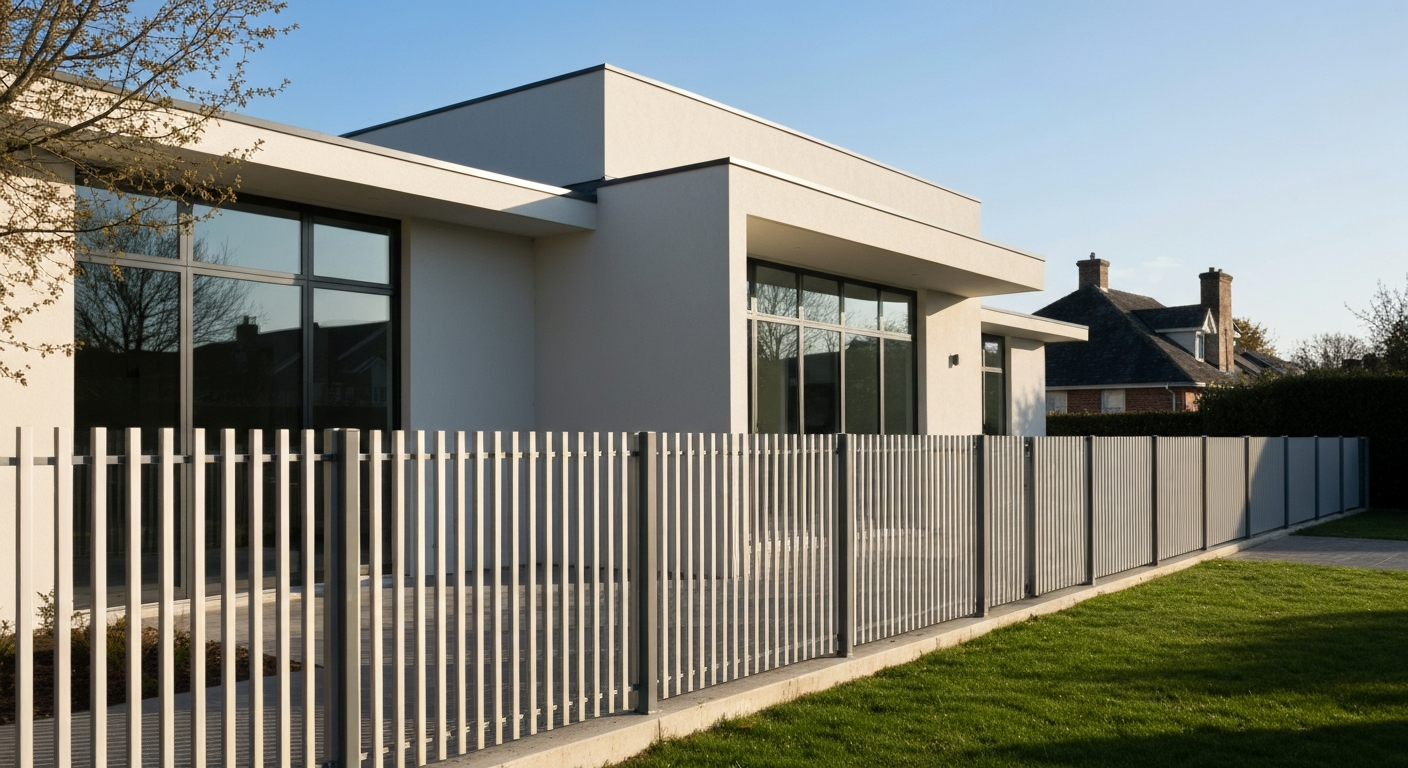
The profits: ideal installers style for tons, not simply appearance
Wind and weather condition form fence efficiency with stress and anxiety cycling, wetness actions, and ground motion. You can select the ideal product, and still end up with a fencing that warps, leans, or loosens up if installation details do not match local conditions.
The best fencing installers check out your website like a system: wind exposure, water drainage patterns, dirt actions, product thermal motion, and hardware option. After that they construct a fencing that can manage real storms without transforming small stress and anxieties into long-term failures.
If you're employing, focus on installers who can clearly explain just how they account for wind and weather at your particular fence line. That's where the long-term distinction lives, long after the very first tidy pictures and smooth gates.